Welcome Guest. | Log In | Register | Membership Benefits
Dark Reading's security-views Weblog

Topics:   : Security Views : Advanced Threats Tech Center
  • |   Email this page E-mail
  • |  Print Print
  • |   Bookmark and Share

A Not-So Targeted Targeted Attack

RSA was likely among several targets associated with a broader campaign that was designed to seek out industrial secrets

Apr 25, 2011 | 09:41 PM | 

By Tom Parker
Dark Reading
Several weeks before news of the RSA compromise broke, a good friend and industry colleague here in D.C. received an email, purportedly from a well-known industry expert on terrorism studies.

The subject of the email touted a listing of risk assessment security organizations, and the attachment appeared to be just that -- an Excel spreadsheet containing a list of many of the major security industry organizations. Embedded within the document was a series of Flash Action Script (rev3), which, in and of itself, is a feature and not necessarily malevolent. However, it all goes Pete Tong from here as the action script then manifested a Shockwave Flash payload, triggering an uninitialized memory reference flaw, which can result in arbitrary code execution on its target. This vulnerability is now better known as CVE-2011-0609.

Some further investigation revealed that my contact was not the only recipient of this email: It had been sent out to a number of other individuals within the security industry -- in likelihood, somewhere in the ballpark of about 100 individuals.

So we have a previously unpatched flaw in Flash 9 and 10 being sent to prominent members of the community in a not-so-convincing email. Prior to understanding the scale on which this exploit had been used, my first thought was that this was not a targeted attack. To begin with, the email lure was on point in terms of genre, but lacked any of the more convincing specifics that are generally associated with highly targeted attacks.

Second, the payload of the overflow was intended to manifest a Windows executable, and Windows-based RAT (Remote Access Tool). Why does this mean it wasn’t targeted? Well, anyone with any degree of familiarity with the individual who it was sent to knows that the person concerned is a huge Mac user and seldom uses a Windows environment -- especially when it comes to everyday tasks, such as emailing and using Microsoft Office.

So this was either a huge waste of an 0day, and the attacker spent all of his time on exploit development rather than target reconnaissance, or the exploit was intended for a broader audience. News of similar emails sent to similarly placed members of the industry (including some former, high-ranking national security policy-makers) confirmed the latter.

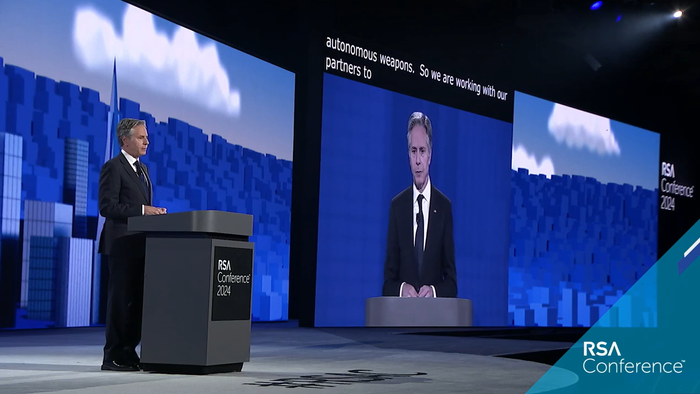
And then there was RSA. Unfortunately, but for good reason, not a lot of technical specifics have been made publicly available by RSA; however, it is clear from what has been released that the phishing email did indeed try to coax RSA employees into opening its attachment through promising details of the “2011 Recruitment Plan,” and was directed toward a "small group of users." RSA have additionally confirmed that the email came complete with an Excel spreadsheet attachment, which exploited the very same Flash vulnerability (CVE-2011-0609) previously used in the aforementioned attacks. This immediately raised some serious questions in my mind as to how targeted the attacks against RSA really were.

As any good follower of TV crime drama knows, when a stolen weapon is used in a crime, it can frequently be used to connect the dots to other crimes involving the same weapon. In many cases, it also provides leads that could eventually lead to the identification of the aggressor. As such, "clean" weapons are the choice tool of the smart criminal, given that a "dirty" weapon might land him in the slammer.

In the cyberdomain, we are similarly able to trace an actor’s field craft between incidents, gain a much clearer picture of motive, and often gather a more complete dataset of forensic evidence. Sophisticated adversaries are aware of this fact and will plan accordingly when engaging in a highly targeted attack, where remaining undetected and unattributed are of utmost concern. And so, while there is much about the RSA attack that has been left to speculation, I believe it’s of importance to put the information which is available into context of other goings-on, especially when it comes to targeting and the true sophistication of the attack.

Is it true to say that RSA was targeted? Sort of.

From the information available, I believe, that RSA was indeed a target, but one of many targets associated with a broader campaign designed to seek out industrial secrets. This is very similar to the modus operandi used by other recent attacks against industry, including the Night Dragon attacks publicized by McAfee in February.

Did those responsible behind the RSA attack develop a specific offensive capability and engage in activities to specifically seek out data associated with RSA’s SecurID and authentication technologies? Absolutely not. All things considered, it is my belief that those behind the RSA hack caught a lucky break, and had never anticipated the level of success that this particular venture might yield.

I believe that clarity around this kind of thing is extraordinarily important when discussing and understanding threats, especially when in conversations with less technical, senior, and executive leadership. If we are led to believe that a nontargeted attack is both targeted and as sophisticated as they come, it sets a psychological bar in our mind's eye that if we introduce specific countermeasures against this level of threat actor, it will be plain sailing from here on out. This is a dangerous precedent to set -- and a precedent that will leave us ill-equipped when the time comes that we really are faced with a threat designed to target discreet weaknesses in an organization.

Tom Parker is director of security consulting services at Securicon.


Currently we allow the following HTML tags in comments:

Single tags

These tags can be used alone and don't need an ending tag.

<br> Defines a single line break

<hr> Defines a horizontal line

Matching tags

These require an ending tag - e.g. <i>italic text</i>

<a> Defines an anchor

<b> Defines bold text

<big> Defines big text

<blockquote> Defines a long quotation

<caption> Defines a table caption

<cite> Defines a citation

<code> Defines computer code text

<em> Defines emphasized text

<fieldset> Defines a border around elements in a form

<h1> This is heading 1

<h2> This is heading 2

<h3> This is heading 3

<h4> This is heading 4

<h5> This is heading 5

<h6> This is heading 6

<i> Defines italic text

<p> Defines a paragraph

<pre> Defines preformatted text

<q> Defines a short quotation

<samp> Defines sample computer code text

<small> Defines small text

<span> Defines a section in a document

<s> Defines strikethrough text

<strike> Defines strikethrough text

<strong> Defines strong text

<sub> Defines subscripted text

<sup> Defines superscripted text

<u> Defines underlined text

Dark Reading encourages readers to engage in spirited, healthy debate, including taking us to task. However, Dark Reading moderates all comments posted to our site, and reserves the right to modify or remove any content that it determines to be derogatory, offensive, inflammatory, vulgar, irrelevant/off-topic, racist or obvious marketing/SPAM. Dark Reading further reserves the right to disable the profile of any commenter participating in said activities.

Disqus Tips To upload an avatar photo, first complete your Disqus profile. | View the list of supported HTML tags you can use to style comments. | Please read our commenting policy.
Subscribe to RSS


  1. Cookies, Social Media And FireSheep
  2. SMB Guide To Credit Card Regulations, Part 2: The Low-Hanging Fruit
  3. HP And The Scary Corporate Fifth Column Concept
  4. Taking USB Attacks To The Next Level
  5. NoSQL: Not Much, Anyway
  1. Taking Cybersecurity Lessons To The Bank
  2. Researchers See Real-Time Phishing Jump
  3. 'BlackSheep' Sniffs Out Firesheep WiFi-Hacking
  4. Slideshow: Ten Free Security Monitoring Tools
  5. A Different Spin On Sleuthing Stuxnet
  6. M&A Activity Muddles Database Security
  1. Secure Managed Web Hosting Saves 960.gs from Malicious Hackers
  2. Access Governance as a Business Service: An Integrated Strategy for Automation with ITSM
  3. Business Driven Access Management and Governance: Simplifying the Delivery and Governance of Access Throughout


  Ars Technica
Boing Boing
Channel 9 Forums
CRN Blogs
Dr.Dobb's Portal: Blogs
Engadget
Gizmodo
GrokLaw
  Lifehacker
Schneier on Security
Slashdot
TechCrunch
Techdirt
Techmeme
Valleywag
 
  February 2012
January 2012
December 2011
November 2011
October 2011
September 2011
August 2011
July 2011
June 2011
May 2011
April 2011
March 2011
February 2011
January 2011
December 2010
November 2010
October 2010
September 2010
August 2010
July 2010
June 2010
  May 2010
April 2010
March 2010
February 2010
January 2010
December 2009
November 2009
October 2009
September 2009
August 2009
July 2009
June 2009
May 2009
April 2009
March 2009
February 2009
January 2009
December 2008
November 2008
October 2008
September 2008