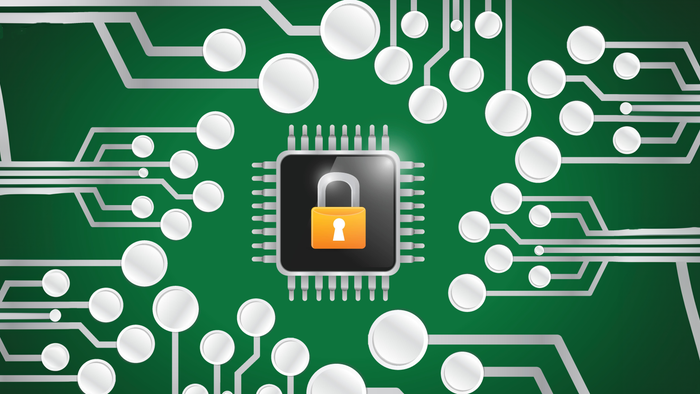
Here are some thoughts about providing users and businesses ways for a website to authenticate a user all the way to the hardware connection to his computer or mobile device.
There are many cases where software methods are sufficient, of course, but higher grades of security might be required by certain applications.
More standard software stacks are needed to link the hardware authenticators to the users’ systems and, ultimately, to websites and servers so that trusted connections are better established. The Internet will likely not tolerate too many proprietary methods of authenticating users, and the likely outcome is a suite of protocols and APIs that become industry standards.
If the websites have a standard API that enables them to immediately interface to “any” hardware or software authenticator on the user’s computer, then changing authentication schemes will be a simple configuration change.
It would be really beneficial for the industry to provide a path that eventually achieves a unified way for users to log in websites regardless of the devices they are using. With the adoption of hardware and stronger software authentication into different platforms, the industry will be marching toward providing standard authentication techniques -- a dream discussed by many.
Recognized in the industry as the "inventor of SSL," Dr. Taher Elgamal led the SSL efforts at Netscape. He also wrote the SSL patent and promoted SSL as the Internet security standard within standard committees and the industry. Dr. Elgamal invented several industry and government standards in data security and digital signatures area, including the DSS government standard for digital signatures. In addition to serving on numerous corporate advisory boards, Dr. Elgamal is the Chief Security Officer at Axway, a global provider of multi-enterprise solutions and infrastructure. He holds a Ph.D. and M.S. in Computer Science from Stanford University. View more of his blog posts here.
| To upload an avatar photo, first complete your Disqus profile. | View the list of supported HTML tags you can use to style comments. | Please read our commenting policy. |
What's Next for Certificate Technology
A recent rash of certificate authority breaches has left a bad taste in many people's mouths. There is no one reason for the breaches. The compromises were the result of a breakdown in people, processes and technology, but not necessarily the certificates themselves. We take a look at what?s wrong with certificate technology, what can be done to fix it, and what's down the road for certificates and CAs.
Will Smartcards Live Up to Their Name?
Recent compromises of smartcard data have exacerbated concerns about the technology?s privacy, security and standards (or lack thereof). Yet the promise of smartcards is too compelling to ignore. New technologies and applications prompt us to take a fresh look.
Get The Best Of Biometrics
As data volume and sensitivity grow, companies cannot rely on password- and token-based authentication. Biometrics can be used to provide strong access control, but you must weigh added complexity and costs against assurance that users are who they say they are.
Other reports from the Authentication Tech Center:
MORE NEWSFEED >>>