Welcome Guest. | Log In | Register | Membership Benefits
  • |   Email this page E-mail
  • |  Print Print
  • |   Bookmark and Share

Compliance Outside Corporate Walls

Getting third parties that touch regulated data to comply can be as important as your own internal compliance efforts

Oct 10, 2011 | 11:49 AM | 

By Ericka Chickowski, Contributing Editor
Dark Reading


Instituting a security-compliance program is hard enough for most enterprises. But when you're also dealing with a whole mess of business partners, vendors, and even customers who must touch and manipulate your critical data, ensuring compliance often becomes a total minefield. When third parties use your IT assets, their security controls become as important to the regulators as yours are.

"A business is responsible and liable for all elements of their service offering, whether it is fulfilled internally or subcontracted to vendors," says Dr. Frank Gozzo, president and CEO of Noverant. "So once an end client imposes certain IT security requirements, it’s critical to ensure the requirements are passed down to all vendors and business partners. At the end of the day, you’re on the hook."

While your internal systems are certainly going to be the main focus of auditors looking for compliance gaffes, these days it's not unheard of for them to also poke into your third-party connections across the supply chain, particularly if those they're handling are very sensitive systems.

"We are beginning to see both internal and external auditors pay far more attention to partners’ environments," says Robbie Higgins, vice president of security and mobile services for GlassHouse Technologies. "Specifically with the pervasiveness of IT outsourcing in addition to the new IT service offerings via virtualization and cloud-based offerings, more comprehensive reviews are being conducted."

As Higgins puts it, in many cases when organizations outsource parts of IT, the vendor is most likely to take on the storage and management of data -- so that vendor becomes a target for breaches as much as you do.

"The challenge for many organizations has been to ensure that the service levels you want, in addition to the policies and procedures you need enforced, are in alignment with what the vendor says he or she will do," he says.

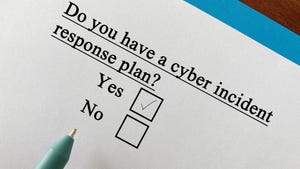
The difficulty there is getting third parties to answer important questions, says Dan Sherman, director of information security for Telos, particularly when they're smaller business vendors without a background in security. Even basic questions like, "Do you have an information security policy?" or, "Do you have an incident response plan?" could be difficult, he says.

"Many times when I ask these questions, the vendors sound like they have never had these questions asked before and are not sure who they need to talk to to get the information, or they just simply do not have it," he says.

Meanwhile, in the IT services and cloud arenas, compliance-information gathering is often stymied by a vendor's reluctance to lift the kimono, either due to fear of inconvenience or of revealing too many infrastructure details that could compromise other customers' information.

"The challenge is that every customer wants to do the audit, and they want their own auditors to be able to do it themselves," says John Nicholson, counsel for the global sourcing practice at Washington, D.C.-based law firm Pillsbury Winthrop Shaw Pittman LLP. "When we start talking about large vendor data centers, particularly in cloud environments, the last thing they want is an auditor or even multiple auditors from different customers traipsing through their data centers on a daily basis."

So what's a customer to do? As Nicholson says, the more you can tie vendors' performance to industry-accepted standards, such as those of NIST or ISO, the better off you are on the security-compliance front. But you still need to check on how well they are actually adhering to those standards -- and that's where the problem is.

For a long time, organizations have looked to their partners and SAS 70 Type II as a "good enough" CYA for compliance and security purposes. But most security experts believe that relying on SAS 70 will not cover much.

"Until recently, checking on their compliance meant usually getting a copy of their SAS 70 Type II, which really wasn't designed to do what people have used it for, but it was the proxy for it," Nicholson says.

One of the problems with SAS 70, says Sherman, is the fact that the certificate holder generally gets to cherry-pick the security controls on which the auditor tests.

"To me, since you can pick and choose what you want to adhere to, it doesn't mean a whole lot," he says. "I will obviously not choose things I cannot meet so I can pass the SAS 70 audit with the bare minimum being met."

According to Nicholson, there are alternatives to SAS 70, though.

"There are also other resources out there, like Shared Assessments, [an organization that is trying to build a more standardized service provider assessment process], which is maturing but is getting there," he says. "Also having them prove compliance with the Cloud Security Alliance's GRC stack is an incredible resource. [You want them] to try and build a checklist that enables auditors to walk in and say, 'OK, give me your checklist. Do you comply with all of these things? Yes? Great.'" Have a comment on this story? Please click "Add Your Comment" below. If you'd like to contact Dark Reading's editors directly, send us a message.


Currently we allow the following HTML tags in comments:

Single tags

These tags can be used alone and don't need an ending tag.

<br> Defines a single line break

<hr> Defines a horizontal line

Matching tags

These require an ending tag - e.g. <i>italic text</i>

<a> Defines an anchor

<b> Defines bold text

<big> Defines big text

<blockquote> Defines a long quotation

<caption> Defines a table caption

<cite> Defines a citation

<code> Defines computer code text

<em> Defines emphasized text

<fieldset> Defines a border around elements in a form

<h1> This is heading 1

<h2> This is heading 2

<h3> This is heading 3

<h4> This is heading 4

<h5> This is heading 5

<h6> This is heading 6

<i> Defines italic text

<p> Defines a paragraph

<pre> Defines preformatted text

<q> Defines a short quotation

<samp> Defines sample computer code text

<small> Defines small text

<span> Defines a section in a document

<s> Defines strikethrough text

<strike> Defines strikethrough text

<strong> Defines strong text

<sub> Defines subscripted text

<sup> Defines superscripted text

<u> Defines underlined text

Dark Reading encourages readers to engage in spirited, healthy debate, including taking us to task. However, Dark Reading moderates all comments posted to our site, and reserves the right to modify or remove any content that it determines to be derogatory, offensive, inflammatory, vulgar, irrelevant/off-topic, racist or obvious marketing/SPAM. Dark Reading further reserves the right to disable the profile of any commenter participating in said activities.

Disqus Tips To upload an avatar photo, first complete your Disqus profile. | View the list of supported HTML tags you can use to style comments. | Please read our commenting policy.
Subscribe to RSS


Compliance Reports

report Security Via HIPAA Compliance
IT organizations in the healthcare industry can make tremendous progress on security initiatives using the HIPAA Security Rule for leverage. Here are some insights on how compliance initiatives can be the catalyst you need to build out your organization's IT security program.

report Security via SOX Compliance
The effort to achieve and maintain compliance with Sarbanes-Oxley requirements remains one of the primary drivers behind many IT security initiatives. In this report, we share 10 best practices to meet SOX security-related requirements and help ensure you'll pass your next compliance audit.

report Security via PCI Compliance? Yes, If You Play Your Cards Right
By teaming up with peers on the compliance side, doing appropriate scoping and preparation, and paying attention to emerging standards, security practitioners can leverage PCI compliance activities to improve the security game of the company as a whole.

Other reports from the Compliance Tech Center:

Related Content

IT Operations Strategies: Manage Applications, Servers and Enterprise Infrastructure
Cut the time and effort of troubleshooting and reporting. ArcSight Logger provides better visibility into IT data to help manage applications, servers and enterprise infrastructure.

Log Management Facilitates IT Operations
Governments and businesses are increasingly vulnerable to cyber-attacks by hackers, malware and malicious insiders. Learn how logs can be used for forensic analysis of cyber-security incidents. Get the key requirements for a universal log management solution and discover how ArcSight Logger delivers on those requirements.

Cost-effectively Automate PCI Audits
Get turnkey and automated PCI compliance. ArcSight PCI Logger is an all-in-one log collection, storage and analysis solution for cost-effective automation of PCI audits and proactive protection of cardholder data.

Priority Health Combats Major Security Issues
Priority Health's ArcSight ESM deployment immediately addressed its most serious security issues. Data from firewalls, syslogs, IDS and Web servers was integrated into a single console -- providing much-needed visibility across the organization.

Case Study: Fiserv Tackles Compliance Challenges
ArcSight Logger makes it possible for Fiserv to quickly sift through terabytes of log data and isolate log events needed for compliance.